�� What Is IIT Delhi? Founded in 1961, IIT Delhi is one of India’s top engineering and research institutions — consistently ranking among the top engineering colleges nationally and globally.

The National Testing Agency (NTA) has once again stayed true to its reputation for inconsistency. With the latest delay in announcing the JEE Main 2026 January session results, the agency has
The path from junior college to top engineering and medical colleges like the Indian Institutes of Technology (IITs) and AIIMS is one of dedication, discipline, and the right guidance. At Nano
Mock tests are no longer just practice papers—they are a critical component of a student’s success during junior college. With increasing competition and evolving exam patterns, regular mock
Junior college is one of the most critical phases in a student’s academic journey. It is the stage where board examinations, competitive entrance tests, and career decisions converge—often
Residential junior colleges in Hyderabad have gained significant attention among students and parents seeking a structured, focused, and distraction-free learning environment after 10th grade.
Introduction: The Importance of Choosing the Right Junior College Choosing the right junior college after completing the 10th grade is one of the most important academic decisions for students
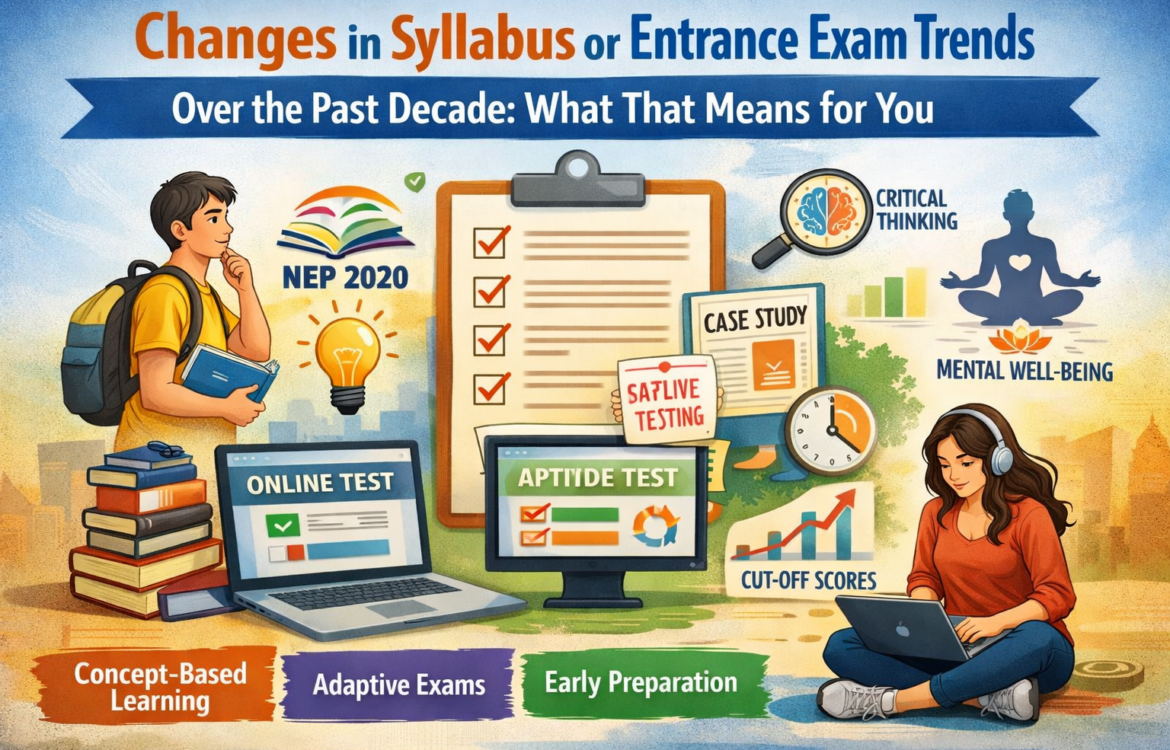
Over the past decade, the educational landscape in India has seen significant transformation. Students, parents, and educators have felt the impact of evolving syllabi, updated entrance exam
Hyderabad has steadily grown into one of India’s most preferred destinations for IIT-JEE coaching. Over the last decade, thousands of students from across the country have chosen Hyderabad for
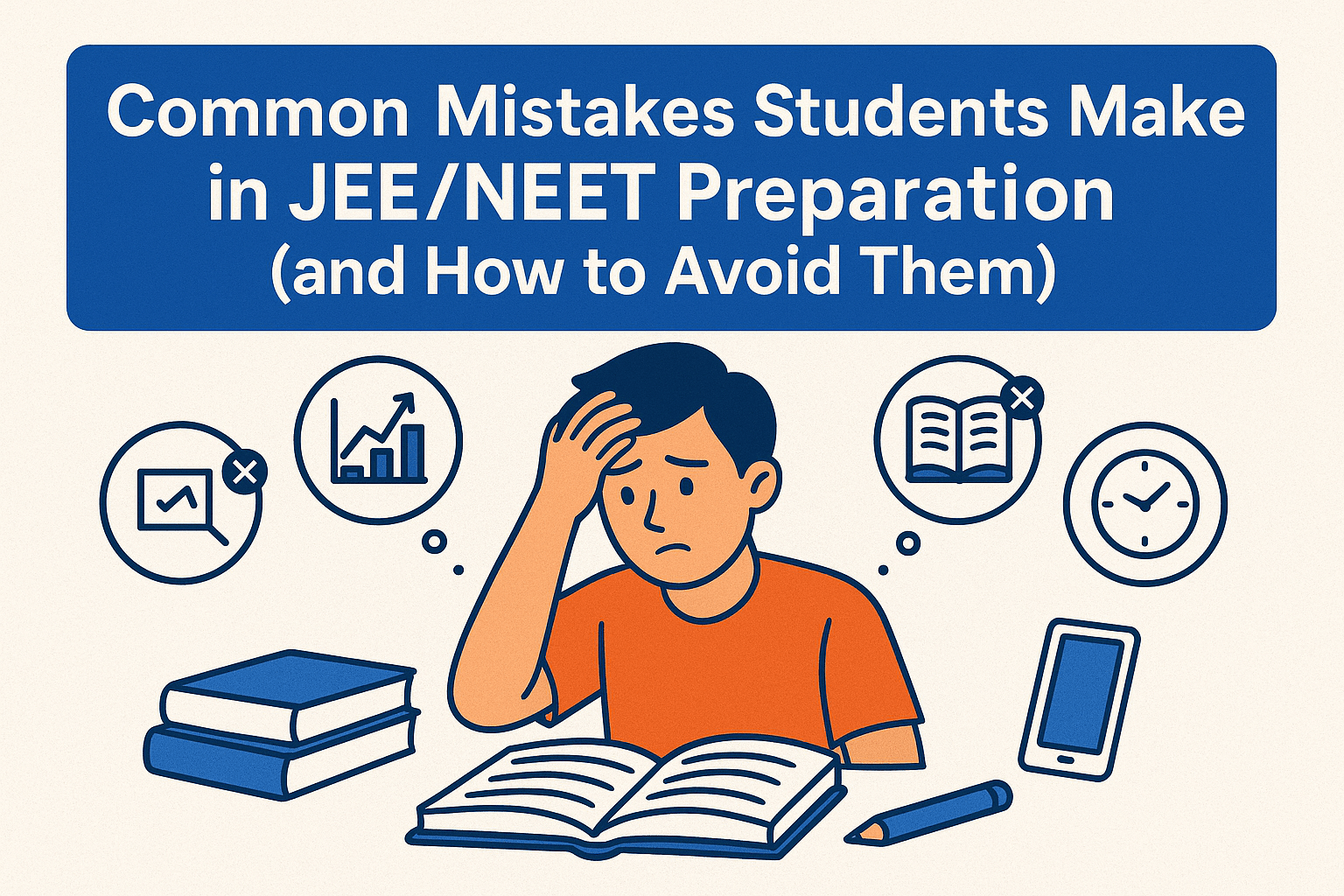
Preparing for JEE or NEET is not just about studying hard — it’s about studying smart. Every year, lakhs of aspirants put in hours of effort, but only a fraction make it to the top ranks. The
Pakhal Plaza, OU Road, Near Shankar Mutt, Nallakunta, Hyderabad – 44.
9000007761 [email protected]
Admission Enquiry
Preparing for JEE or NEET is not just about studying hard — it’s about studying smart. Every year, lakhs of aspirants put in hours of effort, but only a fraction make it to the top ranks. The difference is often small but significant: avoiding common mistakes. Below is an in-depth guide to help students understand pitfalls and build a more strategic, confident approach.
1. Studying Without Understanding the Exam Patte
Many students start preparing blindly without knowing the exam structure. Why this is a mistake: It leads to focusing on the wrong topics, mismanaging time, and uneven preparation.
How to avoid it:
Start by analysing the syllabus, weightage, and previous year papers.
Identify high-scoring chapters and allocate time accordingly.
Track question trends — for example, Mechanics dominates JEE Physics while Biology dominates NEET.
2. Following Multiple Books and YouTube Channels
Students often switch between materials hoping to score more. The downside: This creates confusion and breaks continuity.
Fix:
Stick to NCERT as the foundation.
Choose one trusted coaching material + one standard reference book per subject.
Follow one mentor/teacher consistently to maintain learning flow.
3. Not Building Strong Basics
A major mistake is jumping to advanced questions without clearing fundamentals. Result: Students get stuck, lose confidence, and waste time.
How to avoid it:
Spend the first 2–3 months strengthening basics of Physics, Chemistry and Biology.
Practice basic-level questions before moving to complex ones.
Use formula handbooks, concept maps, and NCERT lines to reinforce fundamentals.
4. Inconsistent Study Routine
Most students study intensely for a few days and then slow down — the biggest killer of long-term retention.
Fix:
Study consistently, not excessively.
Maintain a realistic schedule:
2 hours Physics
2 hours Chemistry
3 hours Biology (NEET) / Maths (JEE)
Break study time into 45–60 min focused blocks.
5. Avoiding Doubts Out of Fear or Hesitation
Some students feel shy or embarrassed to ask questions in class.
Impact: Doubts pile up and become weak points during exams.
Fix:
Maintain a doubt notebook.
Ask doubts immediately — small confusion becomes bigger later.
Use online doubt-clearing tools, teacher support or peer discussions.
6. Overdependence on Coaching
Coaching provides direction but self-study decides rank.
Avoid this mistake by:
Revising daily after class.
Solving questions without looking at solutions.
Allocating 2–3 hours for self-study regardless of coaching hours.
7. Not Taking Enough Mock Tests Early On
Many students take mock tests only at the end of the year.
Why this is harmful:
They do not understand speed, accuracy, or exam pressure.
They repeat the same mistakes without knowing.
Fix:
Start taking one mock test every week from Month 3 onwards.
Increase to 2–3 tests/week near the exam.
Maintain a test analysis register to track incorrect questions, silly mistakes, and time-wasting areas.
8. Neglecting Revision
Students keep studying new topics but fail to revise older ones.
Fix: Follow the 3-layer revision cycle:
Revise after 24 hours
Revise after 7 days
Revise after 30 days
Use flashcards, short notes, and quick revision sheets.
9. Lack of Time Management
Students spend too much time on one subject, or avoid topics they don’t like.
Fix:
Follow a balanced subject schedule.
Use timers for solving questions.
Practice shifting focus between subjects — similar to the exam.
10. Getting Distracted by Phones, Social Media, and OTT
One of the biggest modern mistakes.
Fix:
Use digital detox apps.
Keep your phone in another room while studying.
Limit screen exposure to 30 minutes/day for entertainment.
11. Stress, Anxiety, and Burnout
Many students think studying 12 hours a day is the only way.
Reality: Quality matters more than quantity.
Fix:
Sleep 7–8 hours daily
Do light exercise, meditation, or walking
Take short breaks during study blocks
Keep a positive mindset and track progress weekly
12. Not Solving Previous Year Papers
PYQs give the most accurate idea of exam difficulty.
Fix:
Solve PYQs of last 10 years for each subject.
Understand repeated concepts — competitive exams love patterns.
13. Comparing Yourself With Others
Rank comparison, coaching competition, and peer pressure create negativity.
Fix:
Compete only with your yesterday’s performance
Maintain a personal progress chart
Celebrate small improvements
Conclusion: Avoid Mistakes Early — Choose the Right Guidance with Nano Education
Avoiding these common mistakes can dramatically boost a student’s chances of clearing JEE or NEET with an excellent rank. What truly makes a difference is structured coaching, consistent mentoring, and a focused learning ecosystem.
Nano Education ensures that students stay on the right track by offering: ✔ Concept-driven teaching ✔ Regular mock tests and deep test analysis ✔ Personalized doubt-solving ✔ Weekly performance tracking ✔ Revision-focused study plans ✔ Stress-management and motivational sessions
With its disciplined environment and result-oriented approach, Nano Educationhelps every student avoid these pitfalls and prepare confidently for success.